
Last Updated on July 19, 2026
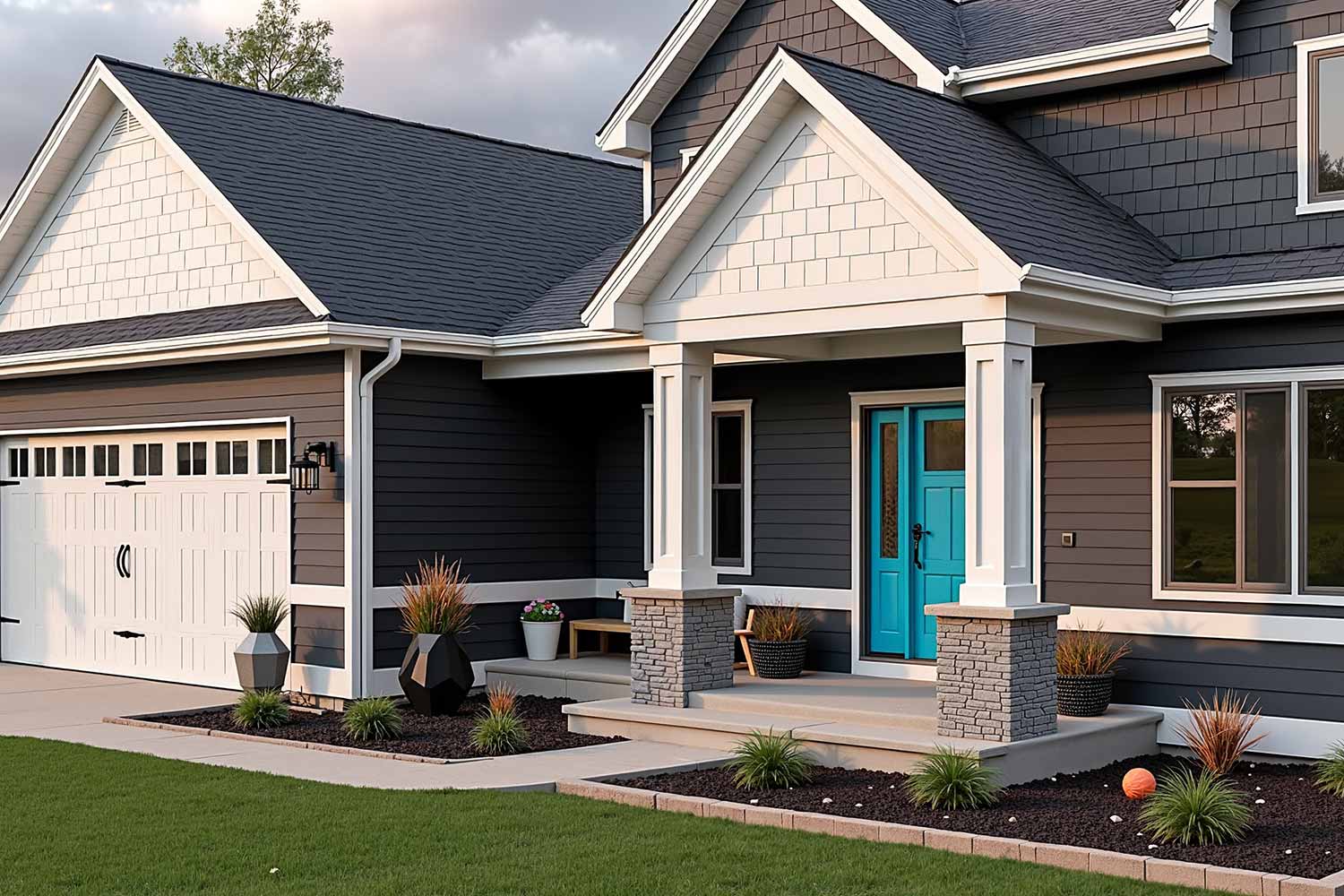
There’s something beautifully self-destructive about standing in front of your home on a 105-degree afternoon, paint roller in hand, absolutely certain today is the day. Though you are painting in hot weather, the vision is already vivid: moody Tricorn Black siding, crisp Alabaster trim, and a front door in some unexpected terracotta that makes every neighbor slow down mid-drive. You have the paint, the time, and the energy. What you also have is a wall hot enough to cook on — and paint chemistry that is about to fail you spectacularly. The timing is about to become the costliest decision of the whole project. Should you have painted or waited?
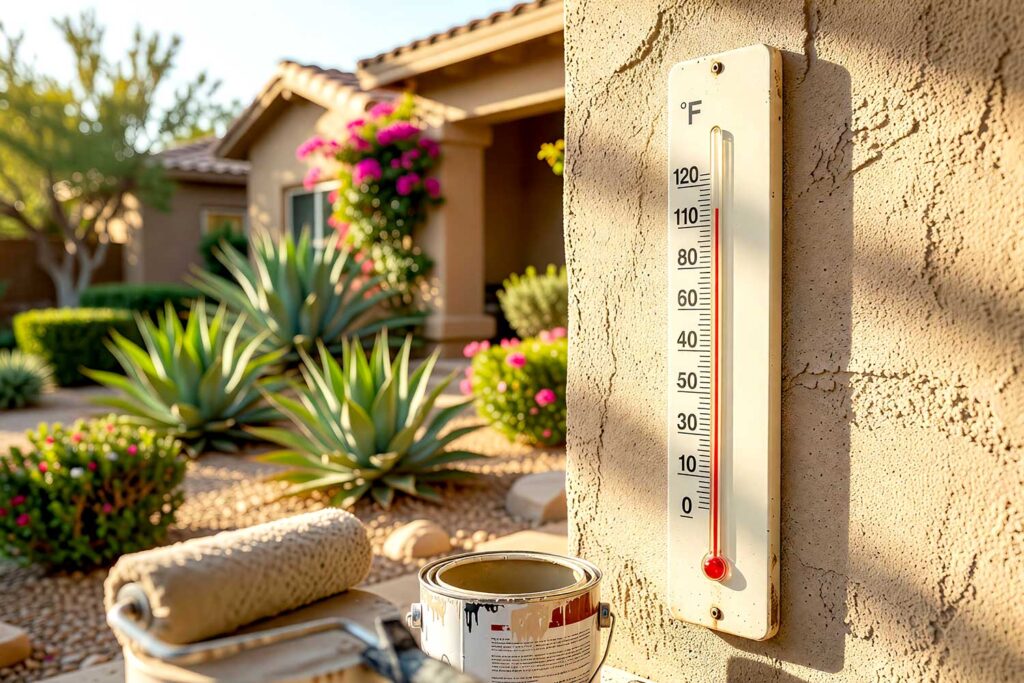
It’s summer. The to-do list is real, the house genuinely needs painting, and contractors are calling you back with two completely different answers — one says he can start Monday, the other says wait until fall. So who’s right? The truth is somewhere more specific than either of them let on, and it starts with understanding exactly what happens the moment paint meets a wall that’s been baking in direct sun all morning. The damage isn’t always dramatic on day one. It unfolds quietly — in the chemistry of the paint film, inside the tools applying it, beneath your siding, and in the body of whoever is climbing that ladder. Painting in hot weather isn’t one problem with one fix. It’s a chain reaction — and what follows is exactly how that chain starts.
What Painting in Hot Weather Actually Does to Your Paint Film
Most quality exterior paints are engineered to perform between 50°F and 85°F — even Sherwin-Williams Emerald only extends that window to 95°F. Push past those limits and painting in hot weather triggers flash-drying: the outer surface skins over in seconds before the molecules underneath can chemically bond to the wall.
Bubbling, blistering, peeling, and stubborn lap marks — all born from losing the wet edge on a surface already too hot for the chemistry to function. Here’s the trap most people miss: even when air temperature reads a manageable 85°F, direct sunlight can spike vinyl or wood siding surfaces well past 150°F. Hot enough to cook paint on contact.
Long-term, the damage goes deeper: brittle paint that cracks at the first cold snap, premature chalking that fades your color within months, and alligatoring — that reptile-skin cracking pattern that cannot be painted over. The wall must be stripped to bare substrate before it can ever be repainted. A job that should protect your home for 7-15 years can fail in 1-3.
When Your Tools Turn Against You
This is where painting in extreme heat gets genuinely brutal — and where the part most homeowners never consider enters the picture.
The heel of a paintbrush — that thick, shaded base of the bristles — becomes a crust machine in the heat. Paint flash-dries inside it before it can flow outward to the tip. Those hardened chunks break loose mid-stroke and drag directly across your freshly painted wall, leaving stringy tracks and boogers baked right into the finish. Roller edges develop what I call crusty halos: hard, dried rings that shed grit into every single pass, permanently embedding bumps into the surface with nowhere to go.
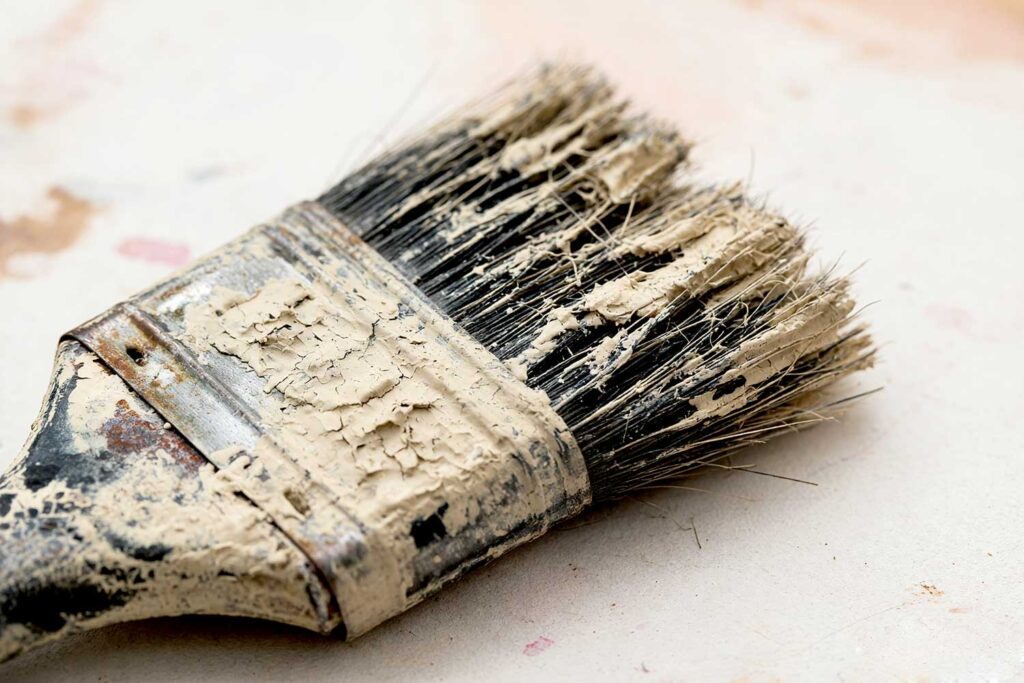
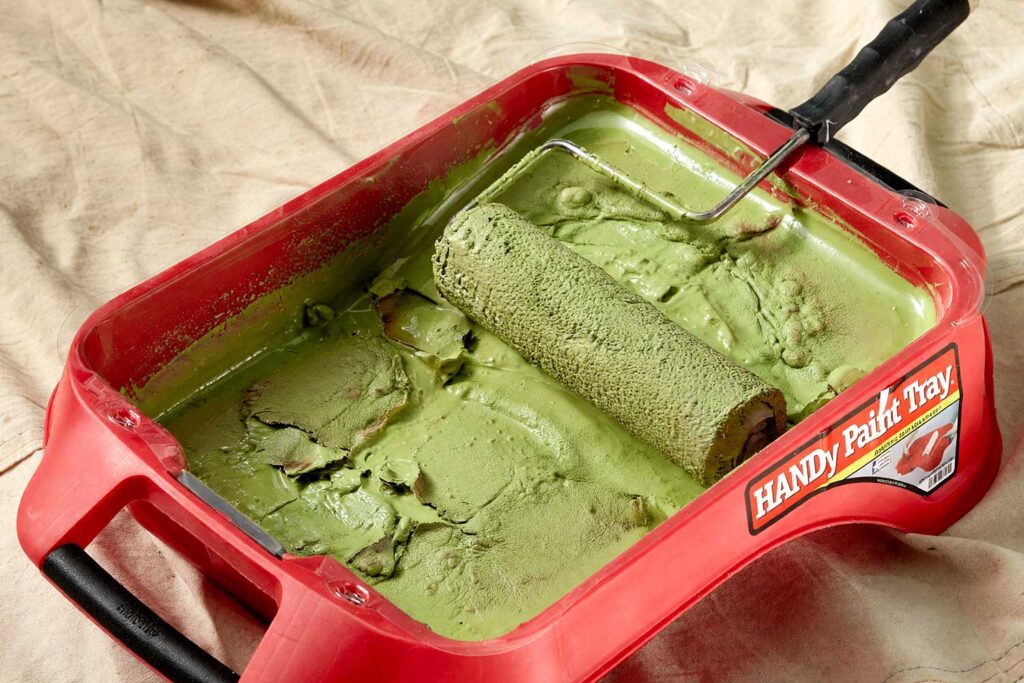
Paint trays turn into chaos within five minutes in direct sun. A thick, rubbery skin forms over the surface — roll through it and you’re scooping up ragged sheets of semi-dried paint that land as blobs no amount of re-rolling will ever smooth out.
Airless sprayers bear the worst of it. A 50-foot hose coiled on scorching asphalt heats the stagnant paint inside to 130°F–160°F, triggering the most hated phenomenon in hot weather painting: dry spray — where paint atomizes into powder mid-air and lands on your wall as colored dust. That sandpaper texture must be completely sanded back before anything new can go over it. There is no painting over dry spray.
What Hot Weather Painting Does to the Structure of Your Home
Hot weather painting isn’t just a cosmetic failure — it’s structural, and the damage can be permanent in ways that don’t reveal themselves for months.
Vinyl siding is engineered to expand and contract naturally with temperature changes. Paint it at peak heat-expansion and the cured film locks it rigid. When evening temperatures drop, the siding has nowhere to go — it warps, buckles, or pops clean off its tracks. Choose a dark color on vinyl during a heatwave and you’ve compounded the problem: the panels absorb more thermal energy than they were ever engineered to handle, causing permanent rippling that no future coat of paint will correct.
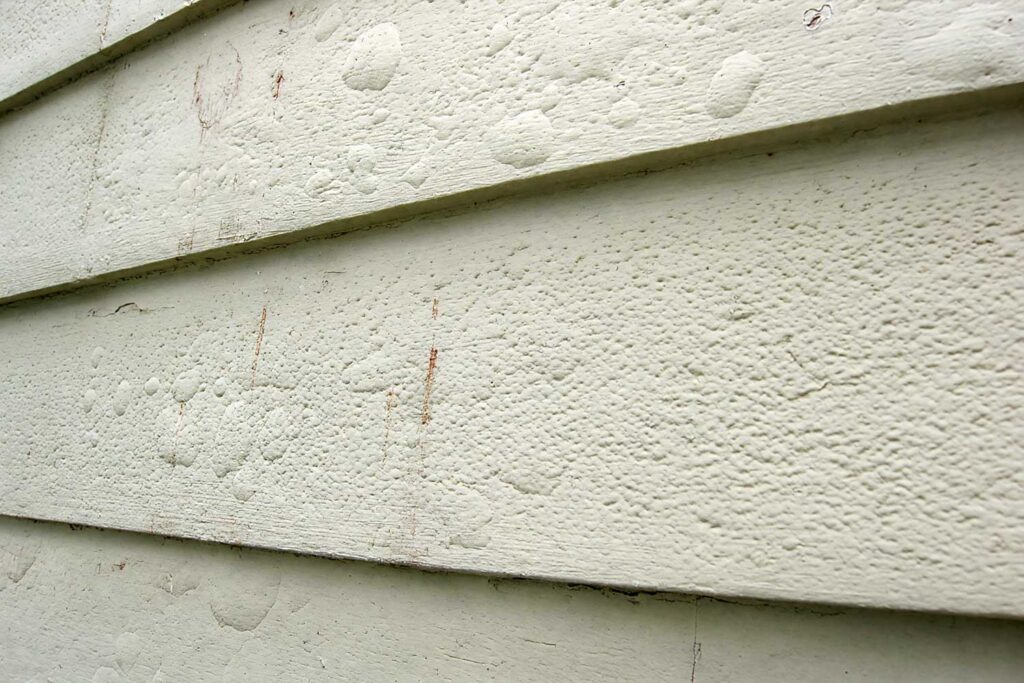
Wood siding carries a slower-burning threat. Moisture trapped deep inside wood fibers converts to steam under extreme heat. When flash-dried paint seals the surface before that steam can escape, it punches micro-craters and pinholes through your brand-new finish — leaving the wood wide open to accelerated rot beneath a surface that may look perfectly fine from the street for months.
The Human Factor: Painting in Extreme Heat Is Physically Dangerous
This one isn’t about chemistry — it’s about you.
House painting is intensely physical work. Climbing ladders, reaching overhead, hauling five-gallon buckets across an exposed surface in direct sun pushes your core temperature toward crisis faster than most people realize. Add severe dehydration, muscle cramps, and heat exhaustion to that equation, and you’ve constructed the exact conditions for a ladder accident. Lightheadedness at the top of a 24-foot extension ladder isn’t a calculated risk. It’s a medical emergency in slow motion.
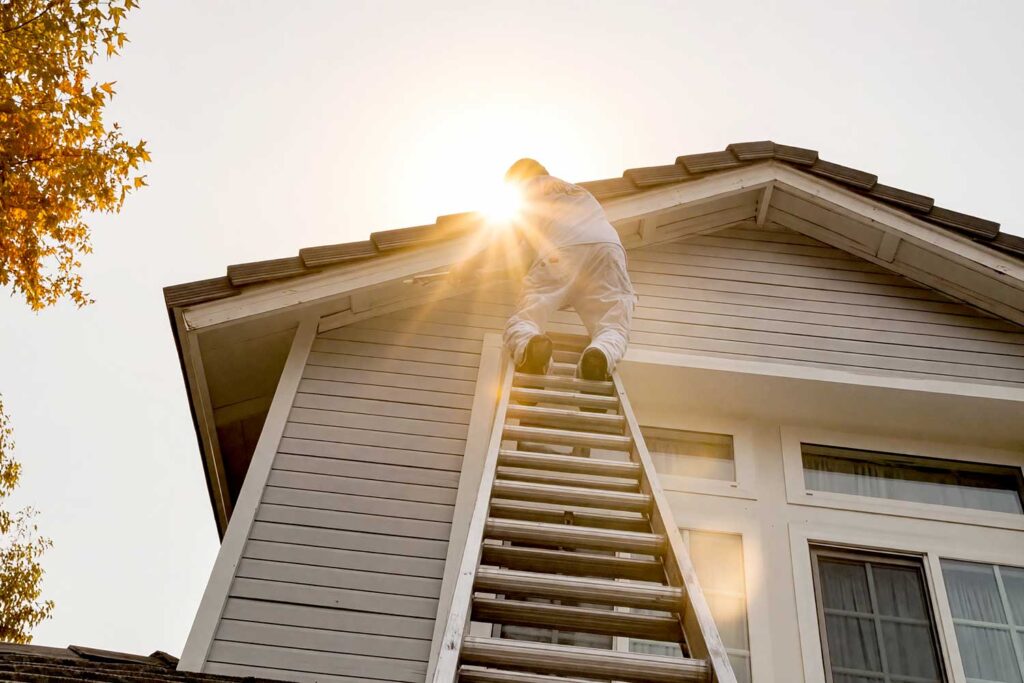
If a contractor shows up at noon in August ready to spray your entire exterior, that isn’t dedication to your project. That’s a red flag about their judgment.
Painting in extreme heat doesn’t just threaten the paint. It threatens the person applying it.
Sherwin-Williams Latitude: Technically Brilliant. Still Not the Answer.
Sherwin-Williams Latitude and its ClimateFlex Technology — rated for surface temperatures up to 120°F — genuinely solves some real problems. It maintains a smooth, workable flow where standard paints go gummy and drag. It develops moisture resistance in as little as 30 to 60 minutes, which matters enormously in climates where afternoon storms show up uninvited. Its VinylSafe tinting options resist heat absorption in dark colors.
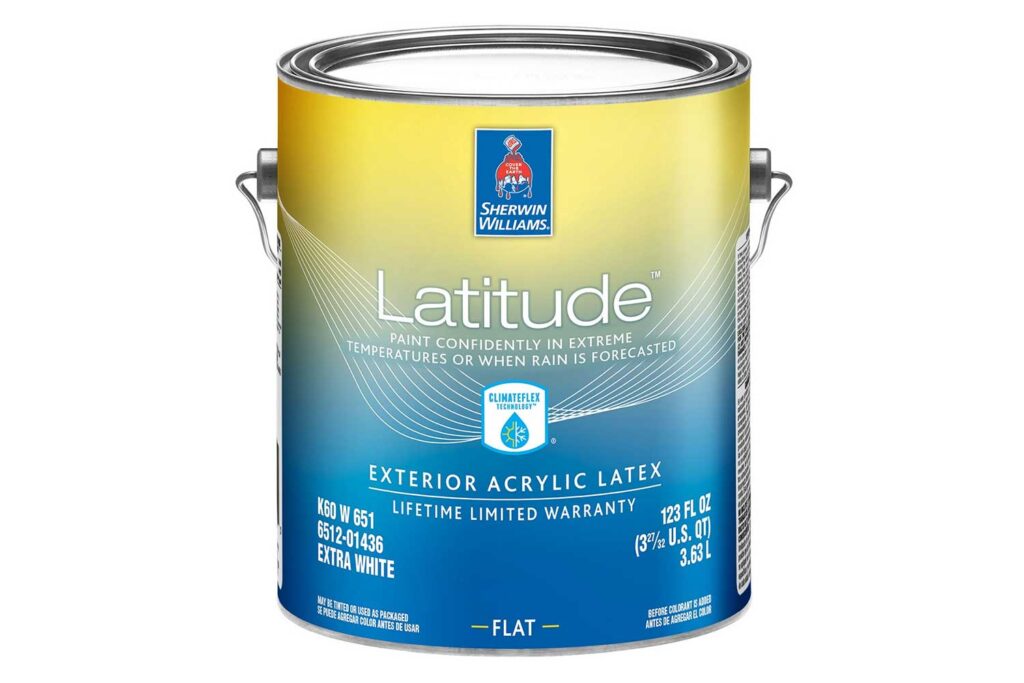
But the field reality is more complicated than the marketing.
Latitude sits at roughly 34% volume solids versus Duration’s 41% — leaving a measurably thinner protective film on your wall. Experienced contractors widely regard it as a “B-Level” production paint: excellent for unpredictable schedules, popular with high-volume crews who need to push work in imperfect conditions. In harsh climates, realistic lifespan expectations sit closer to 3-5 years, not the marketed 8-10. If you’re switching colors, Latitude’s thinner build will likely demand a third coat to fully bury the old one. It’s the kind of detail that feels minor until you see the final invoice. That noticeably flatter, duller sheen compared to Duration or Emerald catches your eye every time light hits the wall at the wrong angle.
Most critically: Latitude solves the paint’s heat problem. It does absolutely nothing for your heat problem as the person standing on the ladder.
Painting in Hot Weather When the Schedule Won’t Move
Sometimes the timeline genuinely doesn’t budge. When painting in hot weather is completely unavoidable, smart technique limits the damage.
“Chasing the shade” means starting at 5 or 6 AM — when surfaces are at their absolute coolest — and strategically following the building’s own shadow as the sun moves through the day. Keep paint cans sealed and stored out of direct sunlight at all times. Wrap brushes and roller covers in cool, damp towels during every break, not just at the end of the day.
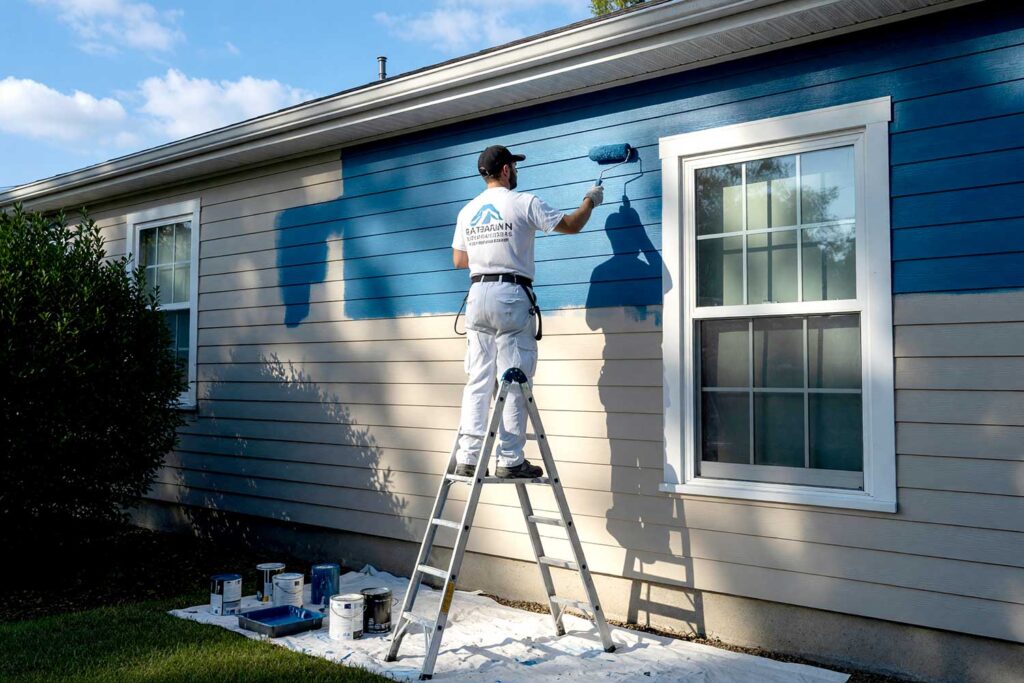
Ditch the tray entirely. A deep cut-bucket with a roller grid reduces exposed paint surface by roughly 80%, dramatically slowing that ruinous skinning effect. For sprayers, submerge the hose coil in cool water, dial back the PSI, and wipe the spray tip clean at every pause before micro-crust has a chance to harden and distort the fan pattern.
But the single most effective strategy for painting in extreme heat is the simplest: wait. Late October through April opens the temperature window where premium paints like Duration and Emerald perform exactly as designed — and where the investment you make actually shows up on your home a decade from now.
Final Brush Strokes: The Smartest Investment Is Knowing When Not to Paint
Painting in hot weather isn’t just an inconvenience — it’s an investment in failure. A job applied under extreme conditions can degrade in 1 to 3 years, leaving behind alligatoring, pinholes, premature chalking, and a repair bill that dwarfs the cost of simply waiting for better weather.
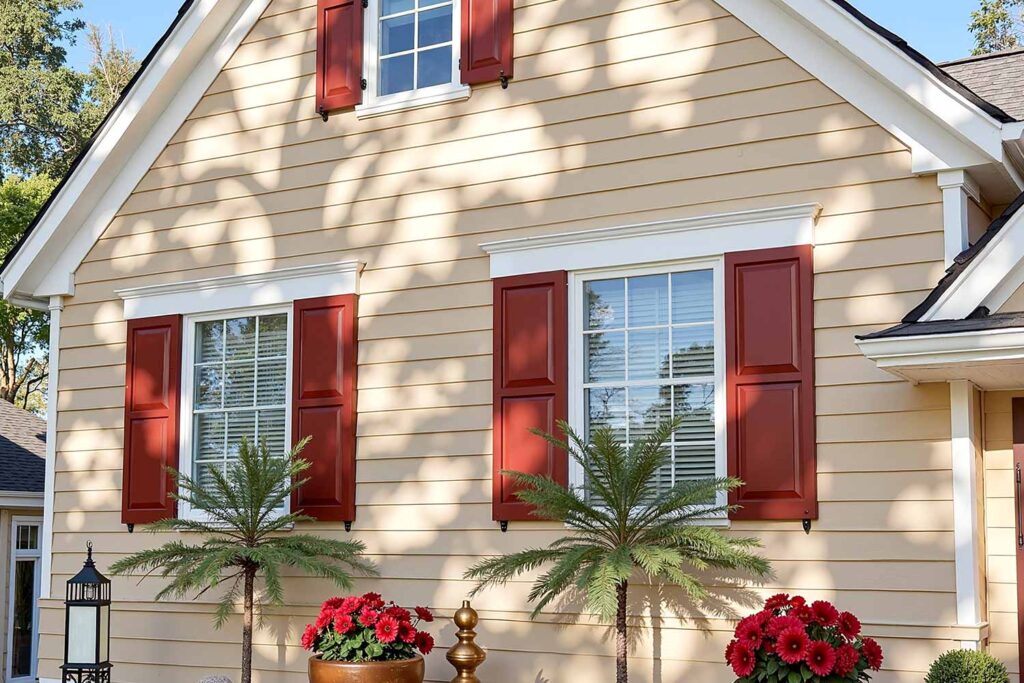
But here’s what I want you to carry away: when conditions are right, the design possibilities for your home’s exterior are genuinely extraordinary. Rich, commanding colors. Bold contrasts that stop people mid-stride. Trim and accent combinations that make the whole street pay attention. All of it is completely within your reach — but all of it deserves to be executed under conditions where premium paint can perform exactly as designed.
Hot weather painting is the fastest path from a beautiful vision to a deeply expensive disappointment. The most valuable thing any skilled contractor can offer isn’t a faster schedule — it’s the honest wisdom to know when not to pick up a brush, and the discipline to wait for the week when your home’s transformation can truly last.
Painting in hot weather above 85–95°F causes flash-drying, poor adhesion, bubbling, and early failure within 1–3 years. Specialty paints like Sherwin-Williams Latitude exist for extreme conditions but have real trade-offs. Waiting for cooler weather delivers far better, longer-lasting results.