
Bryce House Painting executes advanced structural drywall and exterior stucco surface restoration as a core specialty. My rigorous prep work includes taping structural stress cracks, repairing deep drywall voids, power washing masonry, and applying flexible elastomeric patches and high-bond primers to guarantee a permanent topcoat seal.
Critical surface repair solutions including drywall patch repair, texture matching, and elastomeric stucco crack repair to ensure maximum paint adhesion and seamless final coatings. Bryce House Painting is the best painter and painting contractor in the Biltmore, Arcadia, and South Scottsdale areas.


The Bryce Standard vs. The Corner-Cutting “Quick-Patch” Painter
A premium paint finish is only as good as the substrate beneath it. Unfortunately, high-volume painters treat surface prep as a minor inconvenience. When they encounter structural settlement cracks in your interior drywall or deep cracks in your exterior stucco, they simply slap standard, non-flexible spackle or cheap acrylic caulk over the gap and paint right over it while it is still wet. Because these cheap materials shrink as they dry and have zero elasticity, they fail almost immediately. Within a few months, the shifting of your home will cause those exact same cracks to tear right back through your expensive new paint. Even worse, they rarely take the time to match the surrounding texture, leaving behind highly visible “smooth scars” that ruin your walls’ visual continuity.
I treat structural restoration as the most critical stage of the entire painting process. I do not hide damage under a cosmetic layer of paint; I repair it from the inside out. By utilizing heavy-duty fiberglass mesh tapes, fiber-reinforced setting compounds, and advanced elastomeric masonry sealants, I ensure your repairs remain completely stable. Every patch is meticulously hand-sanded, feathered, and custom-textured to integrate flawlessly with your existing walls, creating a durable and visually seamless foundation that stands the test of time.

Exterior stucco in the Phoenix metro area is subjected to brutal environmental stress. Between the scorching summer heat and cold desert nights, your home’s exterior walls undergo constant thermal expansion and contraction.
Definition: Structural stucco restoration is a specialized exterior masonry repair process utilizing high-build, flexible elastomeric compounds and alkali-resistant primers to seal porous stucco matrices, bridge shifting structural cracks, and protect the home from moisture intrusion.
Standard painter’s caulk cannot handle this movement—it quickly dries out, becomes brittle under intense UV exposure, and splits open. To ensure a permanent seal, my stucco restoration process features:
V-Grooving the Cracks: I do not just wipe patch compound over a crack. I use specialized tools to “V-groove” the crack, widening it slightly to clean out loose debris and create a deeper channel for the patching material to bond with.
Elastomeric Patching Compounds: I fill these channels with premium elastomeric patching compounds. Unlike standard stucco patches, elastomeric compounds are engineered with specialized acrylic polymers that allow the patch to stretch and contract up to 300% without cracking or losing adhesion.
Alkali-Resistant Priming: New stucco patch material is highly alkaline, which can chemically attack and break down standard paint binders (a common issue known as “stucco burn”). I seal all repaired zones with a high-performance, alkali-resistant masonry primer to lock in the pH levels and guarantee a secure topcoat bond.
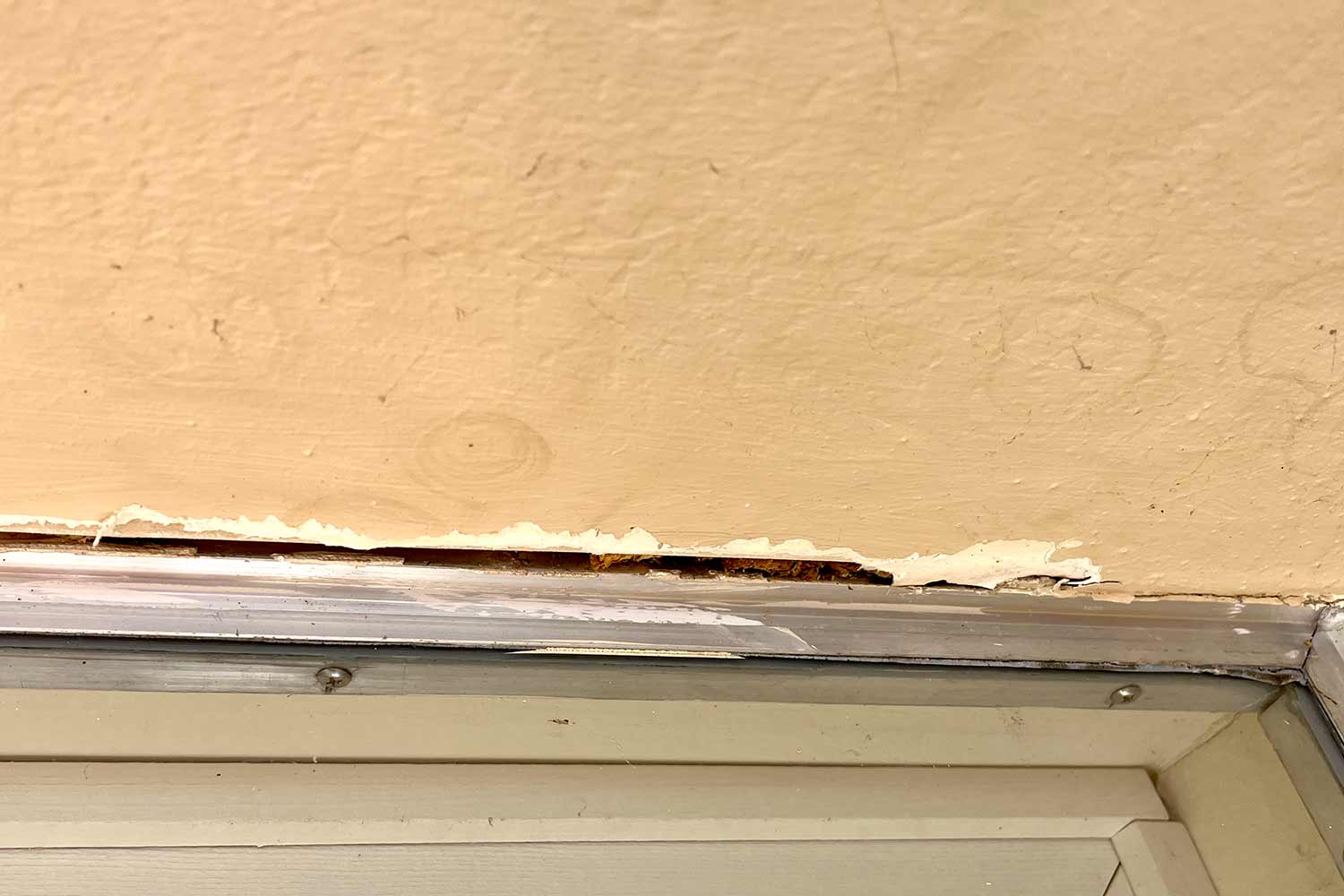
Interior drywall cracks—especially those extending diagonally from the corners of door frames, windows, and vaulted ceilings—are usually caused by soil shifting, seasonal humidity changes, or roof truss uplift. Simply wiping joint compound over these cracks is useless because the underlying movement will immediately reopen the seam.
To break this cycle, I employ a multi-step structural drywall repair protocol:
Relieving Tension: I inspect the framing behind the crack to ensure the drywall sheets are still securely anchored. If there is any play, I drive new, heavy-duty drywall screws directly into the wood studs to lock the panels in place.
Mesh Reinforcement: I embed a high-strength fiberglass mesh or heavy-duty paper tape directly into a base layer of setting-type joint compound (often called “hot mud”). Unlike standard air-drying mud, setting compounds cure through a chemical reaction, forming a rock-hard structural bridge across the crack that resists future shear forces.
Feathering the Profile: I apply multiple thin layers of finishing compound, “feathering” the edges of the patch up to 12 inches outward on both sides of the crack. This wide, gradual slope tricks the eye, making a thick structural patch completely invisible to the naked eye under any lighting angle.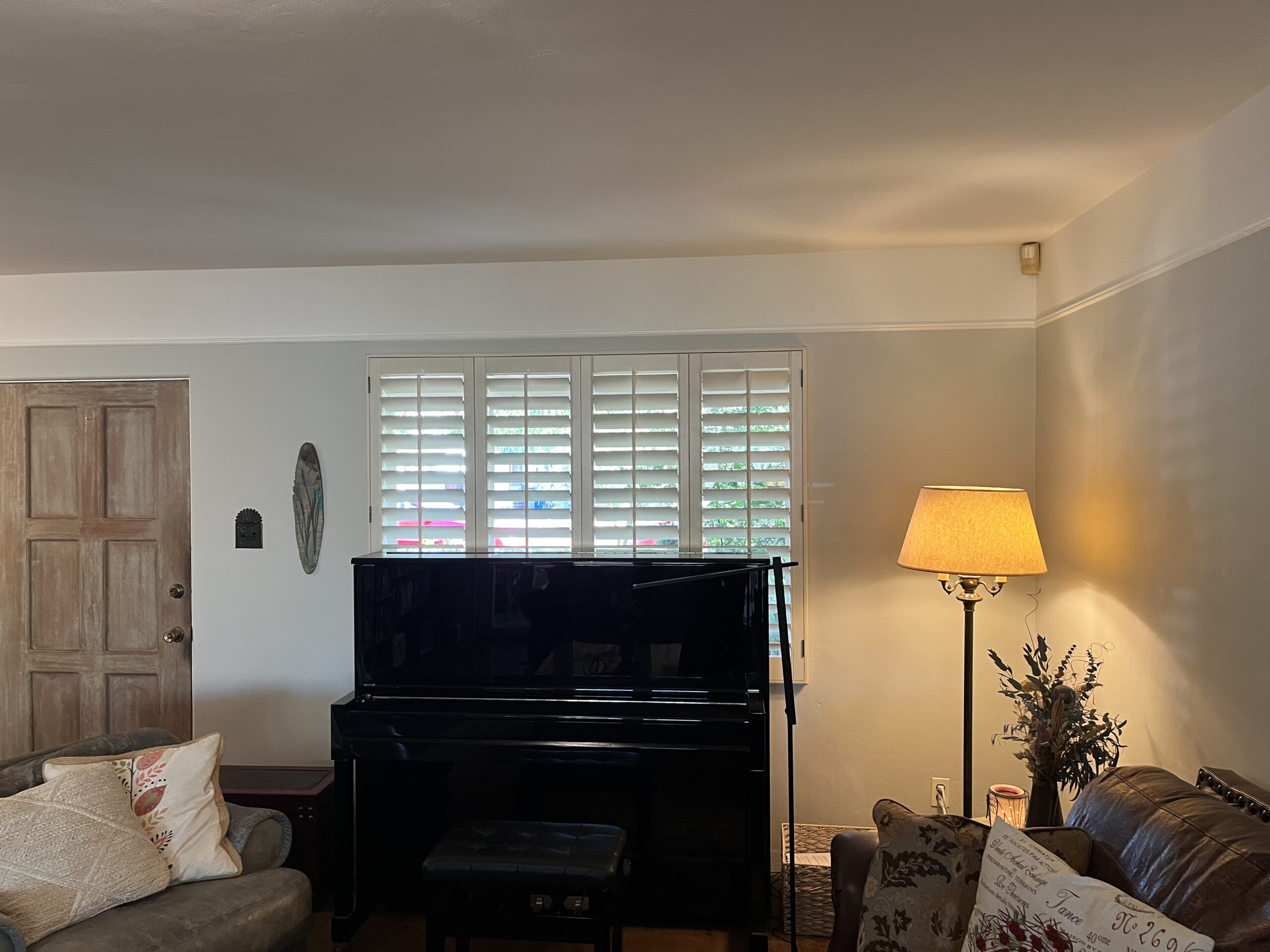
Once a patch is structurally sound, it must be textured to blend perfectly with the surrounding wall. This is where true craftsmanship separates a professional restoration from a sloppy DIY job.
Whether your home features a hand-troweled skip-trowel finish, a contemporary knockdown, or a subtle orange peel, I custom-mix my plaster compounds and calibrate my texturing equipment to match the exact density, droplet size, and hand-pattern of your existing walls. By carefully feathering the new texture into the old, I ensure that once the final premium topcoats are applied, the repaired area is completely indistinguishable from the rest of the room.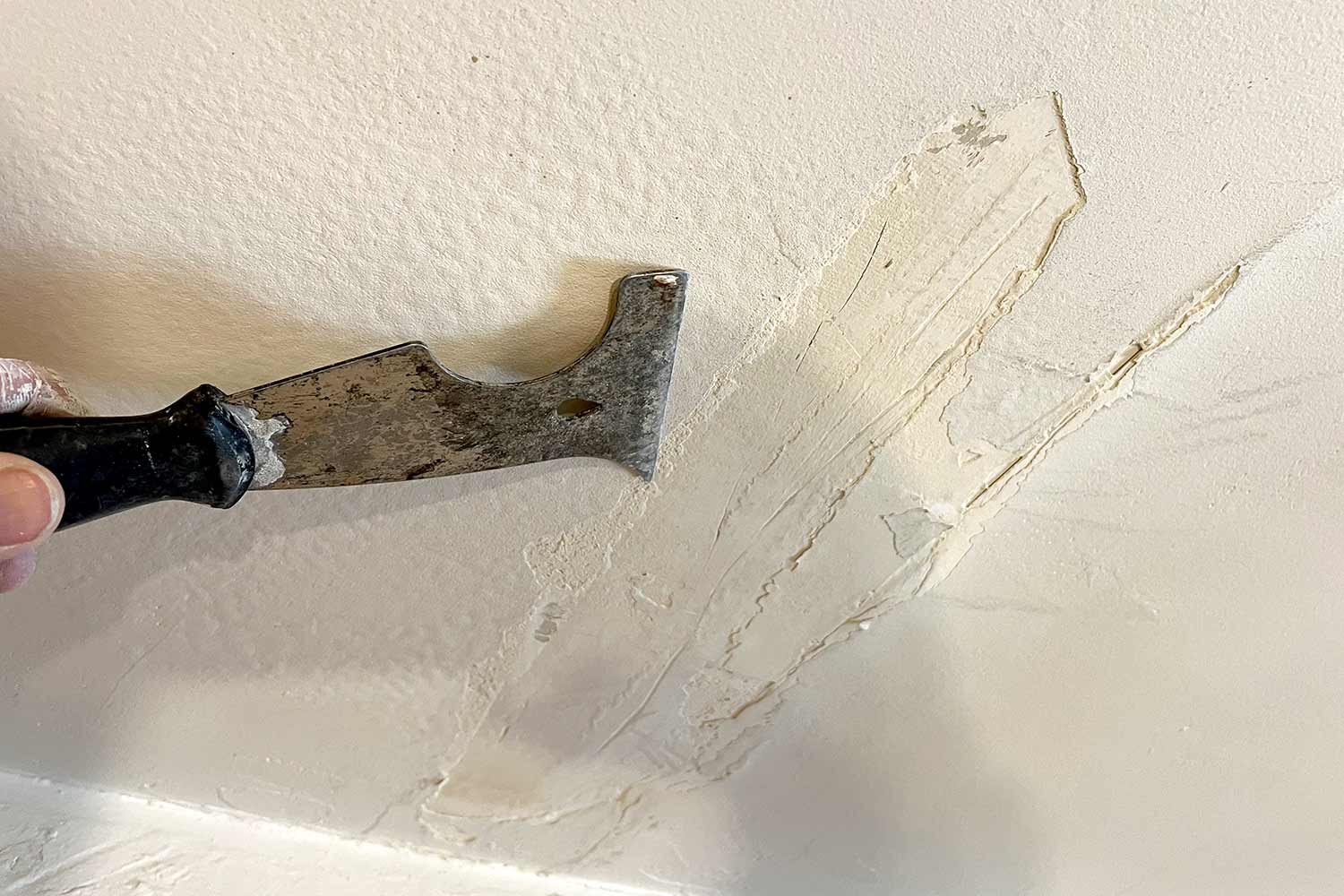
Yes. “Telegraphing” occurs when the texture or porosity of a patch doesn’t match the surrounding stucco. We prevent this by manually matching the stucco pattern, feathering the edges, and applying an alkali-resistant primer to ensure uniform absorption of the final coat.
Yes. Stucco is highly prone to hairline stress cracking. We widen the cracks to clean them out, apply flexible, high-build elastomeric sealants that stretch up to 300% during seasonal shifting, and seal them with masonry primers to prevent future cracks from showing.